
Robert W. Plaster was the kind of businessman whose influence is easier to see than his fortune is to calculate. His name is attached to university buildings, business schools, athletic facilities and a charitable foundation across Missouri and beyond. Yet decades after his death, websites still disagree dramatically about what he was actually worth.
Some online pages claim Robert Plaster was a billionaire, with figures ranging from hundreds of millions of dollars to $5 billion. Those numbers are not backed by a publicly disclosed personal balance sheet.
What can be established is more interesting.
Plaster built Empire Gas Corporation into one of the largest retail liquefied petroleum gas distributors in the United States, later created Evergreen Investments, and developed a substantial portfolio of business interests. His career produced significant wealth, but the exact size of his personal fortune at the time of his death in 2008 has never been reliably documented in a primary public source.
So, what was Robert Plaster’s net worth?
The most accurate answer is that his exact personal net worth is unknown. He was unquestionably a wealthy entrepreneur, but claims of a $5 billion fortune should not be presented as established fact.
Robert Plaster Net Worth: What Can Actually Be Verified?
The first thing to understand about Robert Plaster’s wealth is the difference between documented business value and personal net worth.
Plaster’s best-known company, Empire Gas, became a major propane distributor and was listed on the New York Stock Exchange. He founded the company in 1963 and remained chairman until its divestiture in 1996. After that, he established Evergreen Investments, which was created to manage investments for Plaster and his family.
That business history clearly establishes substantial financial success.
It does not, however, establish a specific personal fortune.
Several modern websites publish numbers such as $1.3 billion, $2.4 billion or $5 billion, but those figures appear without the audited estate records, personal financial statements or other primary documentation that would be necessary to verify them.
A more responsible description is therefore:
Robert W. Plaster was a wealthy American businessman and investor, but his precise net worth at death has not been publicly established.
That distinction matters. A company’s sale price isn’t automatically the owner’s personal proceeds. The value of a foundation isn’t the same as the founder’s estate. And the asking price of a luxury property isn’t proof of what the owner was worth.
Robert Plaster Biography at a Glance
| Detail | Information |
|---|---|
| Full Name | Robert Wayne Plaster |
| Born | September 3, 1930 |
| Birthplace | Kansas City, Missouri |
| Raised in | Neosho, Missouri area |
| Died | October 11, 2008 |
| Age at Death | 78 |
| Profession | Businessman, entrepreneur, investor, philanthropist |
| Best Known For | Founding Empire Gas Corporation |
| Major Later Venture | Evergreen Investments, LLC |
| Wife | Mary Jean Richards Plaster |
| Children | Four |
| Major Philanthropic Focus | Education and free enterprise |
| Foundation | Robert W. Plaster Foundation |
| Net Worth | Not publicly verified |
The birth, death, family and career details are documented in Plaster’s obituary, while his business and philanthropic background is also confirmed by the Robert W. Plaster Foundation and Southwest Baptist University.
Who Was Robert W. Plaster?
Robert Wayne Plaster was a Missouri businessman and civic leader whose career was closely tied to entrepreneurship, propane distribution and later investment management.
Southwest Baptist University describes him as a businessman and civic leader from Lebanon, Missouri. The university’s Hall of Fame profile notes that he founded Empire Gas Corporation in 1963, served as its chairman until 1996 and later chaired Evergreen Investments.
His story is distinctly different from the celebrity biographies that often dominate online net-worth searches.
Plaster wasn’t an actor, musician or television personality. His public profile came from owning and building companies, investing capital and supporting educational institutions.
His name nevertheless continues to generate curiosity because the visible signs of his wealth are striking. His businesses were substantial, his Missouri estate became famous, and the foundation associated with his name continues to hold tens of millions of dollars in assets.
The result is an unusual situation: there is abundant evidence that Plaster was wealthy, but very little evidence that supports one exact number.
Early Life and the Work Ethic Behind His Career
Plaster was born on September 3, 1930, in Kansas City, Missouri, and was raised in the Neosho area.
His childhood took place during the Great Depression, and according to the Robert W. Plaster Foundation, he began working at a young age. He held jobs at a local grocery store and maintained a paper route at Camp Crowder. The foundation says his mother emphasized positive thinking and taught him the phrase, “Can’t Never Could,” which became a personal philosophy throughout his life.
After graduating from high school, Plaster attended Joplin Junior College, studying accounting. He left after three semesters because he could no longer afford tuition and entered the workforce full time. His later obituary records that he also attended what is now Missouri Southern State University.
That detail is central to understanding his later philanthropy.
Plaster eventually became wealthy enough to fund major educational projects, even though his own formal education had been interrupted by financial limitations.
The contrast was not lost on him.
The foundation he established later described his goal as helping young people gain educational opportunities, particularly in southwest Missouri and surrounding areas.
How Robert Plaster Built His Fortune
The Beginning of Empire Gas
The foundation identifies 1963 as the year Plaster founded Empire Gas Corporation, after working for the U.S. Treasury Department and an LP-gas company.
The company became the central business achievement of his career.
Empire Gas expanded substantially and eventually became one of the largest retail LP gas distributors in the United States. The company was listed on the New York Stock Exchange, giving Plaster’s business a level of visibility and scale far beyond its Missouri origins.
Southwest Baptist University’s account confirms that Plaster remained chairman of Empire Gas until 1996.
The company’s growth explains why discussions of Robert Plaster net worth generally begin with the propane industry.
He didn’t build his wealth through one lucky investment.
He built an operating company, expanded it over decades, and then moved into investment activities after leaving the business.
The 1996 Empire Gas Transaction
One of the most frequently repeated numbers in Plaster’s financial story is $120 million.
Historical accounts report that Empire Gas was eventually acquired by Northwestern Public Service in 1996 for approximately $120 million.
That figure provides useful context, but it should not be mistaken for Robert Plaster’s personal net worth.
A $120 million company transaction can involve debt, corporate obligations, other owners, transaction costs and different classes of interests. It does not automatically mean the founder personally received $120 million.
Even so, the transaction demonstrates the scale of the business Plaster had created.
The same year he exited Empire Gas, he established Evergreen Investments, marking a transition from operating a major propane company to managing and developing investments.
Evergreen Investments and the Expansion Beyond Propane
Robert Plaster’s wealth story didn’t end with Empire Gas.
The Robert W. Plaster Foundation says that after selling Empire Gas in 1996, he founded Evergreen Investments, LLC, which invested in numerous enterprises.
A federal appellate court later described Evergreen Investments as a Missouri-based company formed to manage the investment activities of Robert Plaster and his family. The case involved Evergreen’s attempted acquisition of FCL Graphics, with a proposed transaction valued at $53 million.
That court record is useful because it provides something many online biographies lack: independent documentation showing that Plaster’s financial interests extended beyond his original propane business.
The investment structure also helps explain why determining his personal net worth is difficult.
Wealth held through companies, trusts, investment partnerships and other entities cannot simply be added together and labeled “Robert Plaster net worth.”
A person’s economic interests may be substantial without there being a single public document listing everything he owned.
Robert Plaster’s Net Worth Was Not the Same as His Foundation’s Wealth
The Robert W. Plaster Foundation is one of the strongest pieces of publicly available financial evidence connected to his legacy.
But it is also one of the easiest things to misunderstand.
According to IRS-derived nonprofit data, the foundation reported approximately $73.6 million in net assets for fiscal year 2024. It reported approximately $4.53 million in revenue and $4.61 million in expenses that year.
Those are real financial figures.
They are not Robert Plaster’s personal net worth.
The foundation is a separate nonprofit organization. Its assets are dedicated to its charitable purposes rather than being personal property that can be added to an individual’s estate.
What the figures do show is the continuing scale of the philanthropic structure Plaster established.
The foundation has continued making major grants, particularly to colleges and universities. Its reported 2023 grants included $1.8 million to Cedarville University, $312,000 to Park University for the Robert W. Plaster Free Enterprise Center, $292,000 to Concordia University Wisconsin and $250,000 to Southwest Baptist University.
That level of giving helps explain why the Plaster name remains visible on campuses long after his death.
Philanthropy Became a Major Part of His Legacy
If Robert Plaster’s story is reduced to a net-worth number, the most lasting part of his career disappears.
Education was central to his later life.
Southwest Baptist University’s Hall of Fame profile records his support for Plaster Stadium, Plaster Guest Lodge, the Mellers Conference Center and the Taylor Free Enterprise Building. It also notes his involvement with Central Methodist University, College of the Ozarks and the Southwest Missouri State University Foundation.
The Robert W. Plaster Foundation says its founder wanted to open educational opportunities for young people and believed that education multiplied the effectiveness of hard work.
That philosophy can still be seen in the foundation’s activities.
Its official media archive lists projects involving Missouri Baptist University, North Greenville University, Cedarville University, Concordia University Wisconsin, Columbia College and other institutions.
The scale of that institutional footprint is arguably more measurable than his personal fortune.
Robert Plaster and the Evergreen Crystal Palace
Another reason the public remains fascinated by Plaster’s wealth is the extraordinary property associated with him near Table Rock Lake in Missouri.
The estate, commonly referred to as the Evergreen Crystal Palace, was developed in the early 1990s and became one of the region’s most unusual examples of private luxury.
Historical reporting has described a structure of roughly 28,000 square feet, with extensive acreage and highly elaborate amenities. One account reported that the building cost approximately $6 million to construct in the early 1990s, while the surrounding land was assessed separately at the time.
The property later attracted national and regional attention when it was offered for sale with an asking price reported around $80 million.
That figure is eye-catching, but once again, an asking price isn’t proof of an owner’s net worth.
The distinction matters because internet wealth articles sometimes take an $80 million property valuation, add a corporate sale price and then add foundation assets before presenting the total as personal wealth.
That’s not a sound way to calculate net worth.
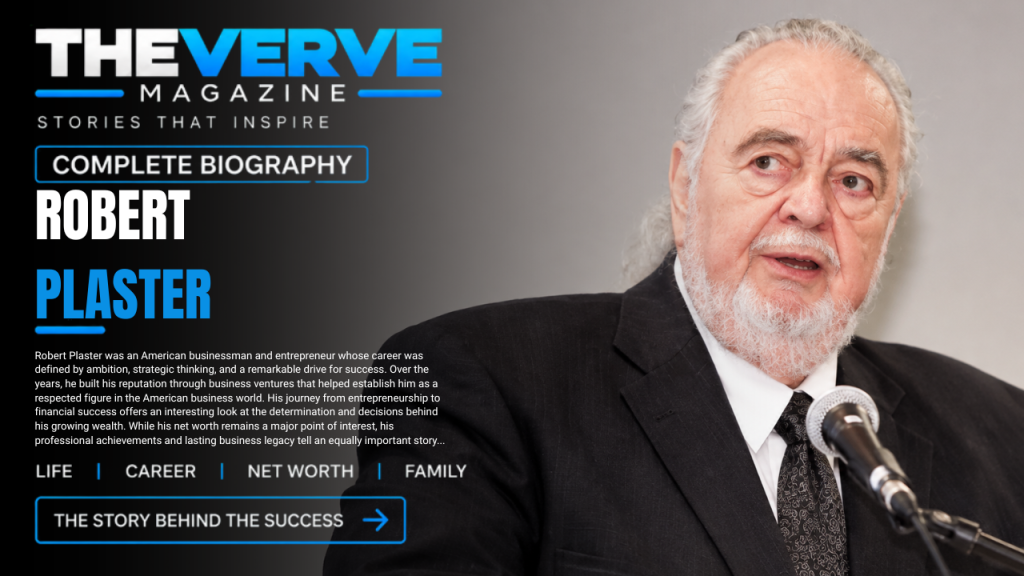
Robert Plaster Age and Death
Robert W. Plaster was born on September 3, 1930, and died on October 11, 2008.
His obituary states that he was 78 years, one month and eight days old when he died at his home in Evergreen, Missouri, near Lebanon.
He had married Mary Jean Richards on February 14, 1951. The couple had four children: Stephen Plaster, Cheryl Plaster Schaefer, Tammy Plaster Brown and Dolly Plaster Clement. The obituary also records nine grandchildren and one great-grandchild at the time of his death.
The obituary describes a career that extended well beyond Empire Gas. It lists leadership or founding roles involving Evergreen Investments, Empire Pipeline Corporation, Evergreen National Corporation, Empire Ranch, Champion Brands and Evergreen Exploration.
That breadth helps explain why his financial story cannot be reduced to a single business.
A Career Timeline
| Year | Milestone |
|---|---|
| 1930 | Born in Kansas City, Missouri |
| 1951 | Married Mary Jean Richards |
| 1963 | Founded Empire Gas Corporation |
| 1971 | Empire Gas was listed on the New York Stock Exchange |
| 1983 | Established the Robert W. Plaster Foundation |
| 1990s | Expanded business and investment interests |
| 1996 | Empire Gas era ended; Plaster moved into Evergreen Investments |
| 1999 | Inducted into Southwest Baptist University’s Athletics Hall of Fame |
| 2008 | Died at age 78 |
| 2024 | Plaster Foundation reported roughly $73.6 million in net assets |
The dates and milestones above are drawn from Plaster’s obituary, the foundation’s founder profile, Southwest Baptist University and nonprofit financial records.
Was Robert Plaster a Billionaire?
There is no reliable public evidence that allows Robert W. Plaster to be definitively described as a billionaire.
That doesn’t mean he wasn’t extraordinarily wealthy.
It means the available evidence doesn’t justify the claim.
Some contemporary biography websites publish estimates as high as $5 billion, while others have claimed figures in the hundreds of millions or more than $1 billion.
The problem is that these figures generally don’t explain how they were calculated.
More importantly, they aren’t supported by a publicly available estate inventory or audited personal financial statement.
The strongest documented facts instead show:
- He founded and led a major propane distribution company.
- Empire Gas was eventually involved in a transaction reported at approximately $120 million.
- He subsequently controlled or managed investment activities through Evergreen-related entities.
- A federal court identified Evergreen Investments as managing investments for Plaster and his family.
- His philanthropic organization has maintained tens of millions of dollars in assets.
- He owned or was associated with valuable real estate and other businesses.
Taken together, those facts establish considerable wealth.
They don’t establish a $5 billion personal fortune.
Confirmed Facts vs. Online Estimates
| Claim | Assessment |
|---|---|
| Robert Plaster was a wealthy businessman | Confirmed |
| He founded Empire Gas in 1963 | Confirmed |
| Empire Gas became a major LP gas distributor | Confirmed |
| He remained chairman until 1996 | Confirmed |
| He later founded Evergreen Investments | Confirmed |
| Evergreen managed investments for Plaster and his family | Confirmed in federal court records |
| Empire Gas transaction was reported at about $120 million | Reported historical figure |
| Robert Plaster was worth exactly $5 billion | Not verified |
| Robert Plaster was worth exactly $2.4 billion | Not verified |
| His foundation’s assets equal his personal net worth | Incorrect |
| His exact net worth at death is publicly established | No |
This distinction is especially important because many online biographies repeat one another. Repetition isn’t the same thing as independent verification.
Why Do Robert Plaster Net Worth Estimates Differ So Much?
There are several reasons.
First, Plaster was involved with private companies and investment entities rather than a modern public-company fortune that can be tracked through stock-market filings.
Second, his wealth changed form over time. He moved from Empire Gas into investment activities, meaning that the value of his holdings wasn’t tied to one easily measured asset.
Third, trusts and related entities complicate the picture. Federal court records show that the Robert W. Plaster Trust was closely connected to Evergreen Investments, demonstrating that some of his financial interests were structured through entities rather than held entirely in his own name.
Finally, online net-worth websites often use estimates without explaining their methodology.
That’s why a responsible article should resist the temptation to choose the biggest number.
What Happened to Robert Plaster’s Wealth After His Death?
Plaster died in 2008, so there is no meaningful “current personal net worth” in the same sense used for living celebrities or entrepreneurs.
The more relevant question is what happened to the assets and institutions connected with his estate.
His businesses, family investment interests, real estate and charitable structures followed their own legal and financial paths. Some assets could have been transferred, sold, reinvested or placed into charitable structures.
The foundation remains active and continues making grants.
Its 2024 financial data showed approximately $73.6 million in net assets, demonstrating that the charitable legacy associated with Plaster remained financially significant many years after his death.
This is one reason his name continues appearing in searches today.
The fortune itself may no longer be visible as one individual’s balance sheet, but its institutional footprint remains.
Robert Plaster’s Cultural and Business Legacy
Plaster’s importance is largely regional, but that doesn’t make it insignificant.
He belonged to a generation of American entrepreneurs who built companies outside the traditional financial and media capitals. His business career was rooted in southwest Missouri, and his philanthropy was similarly concentrated around education and community development.
Ingram’s recent retrospective on influential Missourians describes Plaster as an entrepreneur from Neosho who built Empire Gas into one of the country’s largest retail propane distributors, later founded Evergreen Investments and became an advocate for free enterprise.
His connection to Students in Free Enterprise was particularly important. The Robert W. Plaster Foundation describes him as a co-founder and active supporter of the organization, while his obituary notes that he served on its executive committee.
His name therefore became associated with an idea as much as with a fortune: the belief that entrepreneurship and education could reinforce one another.
That idea continues through the educational institutions carrying his name.
Interesting Facts About Robert Plaster
He left college because he couldn’t afford tuition
Plaster attended Joplin Junior College for three semesters before leaving because he could no longer afford tuition. Later, he became a major supporter of higher education.
Empire Gas was listed on the New York Stock Exchange
The company he founded in 1963 eventually achieved the scale required for a New York Stock Exchange listing in 1971.
He built an investment business after selling Empire Gas
Rather than simply retiring after his major business career, Plaster established Evergreen Investments, which later managed investment activities for him and his family.
His name remains on multiple university facilities
His philanthropic support helped fund buildings and facilities at several universities, including Missouri State University and Southwest Baptist University.
His foundation remains financially substantial
The Robert W. Plaster Foundation reported approximately $73.6 million in net assets for fiscal year 2024.
His fortune is easier to document through transactions than through a final number
Business records, court documents, nonprofit filings and institutional histories reveal pieces of his financial story, but no authoritative public document provides one final personal net-worth figure.
Why People Search for Robert Plaster Net Worth
The search is understandable.
Plaster founded a major company, participated in investment activities, owned valuable property and left behind a foundation with significant assets. His name is also attached to numerous educational facilities.
At the same time, online articles have attached eye-catching billionaire figures to him. That creates a natural question: was Robert Plaster really worth billions?
The available evidence suggests caution.
Interest in his net worth appears to come less from celebrity culture and more from curiosity about how a regional businessman could build such a large business footprint.
There is also a generational appeal to his story. Plaster wasn’t famous because millions of people followed him online. His reputation was built through ownership, business relationships, institutions and philanthropy.
That’s a very different form of public recognition.
Frequently Asked Questions
What was Robert Plaster’s net worth?
Robert Plaster’s exact personal net worth has not been reliably established in a primary public source. Online estimates range from tens or hundreds of millions to several billion dollars, but the larger figures are not adequately documented.
Was Robert Plaster a billionaire?
There is no authoritative public evidence confirming that Robert W. Plaster was a billionaire. He was unquestionably a wealthy businessman, but claims of a $5 billion personal fortune remain unverified.
How did Robert Plaster make his money?
His principal documented business success came from Empire Gas Corporation, the LP gas company he founded in 1963. After leaving Empire Gas in 1996, he founded Evergreen Investments and continued managing and developing business interests.
How much was Empire Gas sold for?
Historical accounts report that Empire Gas was ultimately acquired for approximately $120 million in 1996. That was the reported company transaction value and should not automatically be treated as Robert Plaster’s personal proceeds.
When was Robert Plaster born?
Robert Wayne Plaster was born on September 3, 1930, in Kansas City, Missouri. His obituary says he was raised in the Neosho area.
How old was Robert Plaster when he died?
He was 78 years old when he died on October 11, 2008. His obituary gives his age as 78 years, one month and eight days.
Who was Robert Plaster’s wife?
Robert Plaster married Mary Jean Richards on February 14, 1951. They had four children.
Did Robert Plaster have children?
Yes. His obituary identifies one son, Stephen Plaster, and three daughters: Cheryl Plaster Schaefer, Tammy Plaster Brown and Dolly Plaster Clement.
What is the Robert W. Plaster Foundation?
It is a private foundation established by Robert Plaster to support educational projects and institutions. Its current financial records show substantial continuing assets, including approximately $73.6 million in net assets reported for fiscal year 2024.
What is Robert Plaster best known for?
He is best known for founding Empire Gas Corporation and later establishing Evergreen Investments. His second major legacy is philanthropic, particularly his support for higher education and free-enterprise initiatives.
Final Thoughts
Robert Plaster’s financial story is a useful reminder that wealth doesn’t always come with a clean public number.
There is no verified document showing that he was worth $5 billion. There is also no reason to minimize the scale of what he accomplished. He founded Empire Gas, built it into a major propane distributor, moved into investment management through Evergreen and became a significant philanthropist.
The documented record is already impressive.
His foundation continues to hold substantial assets and make major educational grants. Universities continue to carry his name. His business career remains part of Missouri’s entrepreneurial history. And the enormous property associated with his name still captures public imagination.
In the end, the most defensible answer to the Robert Plaster net worth question is simple: his exact personal fortune is unknown, but the evidence clearly places him among the highly successful and wealthy American entrepreneurs of his generation.
Perhaps the more meaningful measure is what happened to that success afterward. Much of Plaster’s public legacy is now represented not by a number, but by classrooms, business centers, athletic facilities and educational opportunities that continued long after he was gone.
That is a legacy that a net-worth estimate alone can’t measure.
[…] relationship subsequently received renewed attention, including through reports of their shared business interests. Still, public reports about reconciliation don’t establish every detail of their private […]
[…] agricultural production, customer experiences, products, and publishing. Each has a different business model, expense structure, and potential contribution to […]